[TEXTILE SAMPLES]. “Stock.” [St. Etienne, 1907-08].
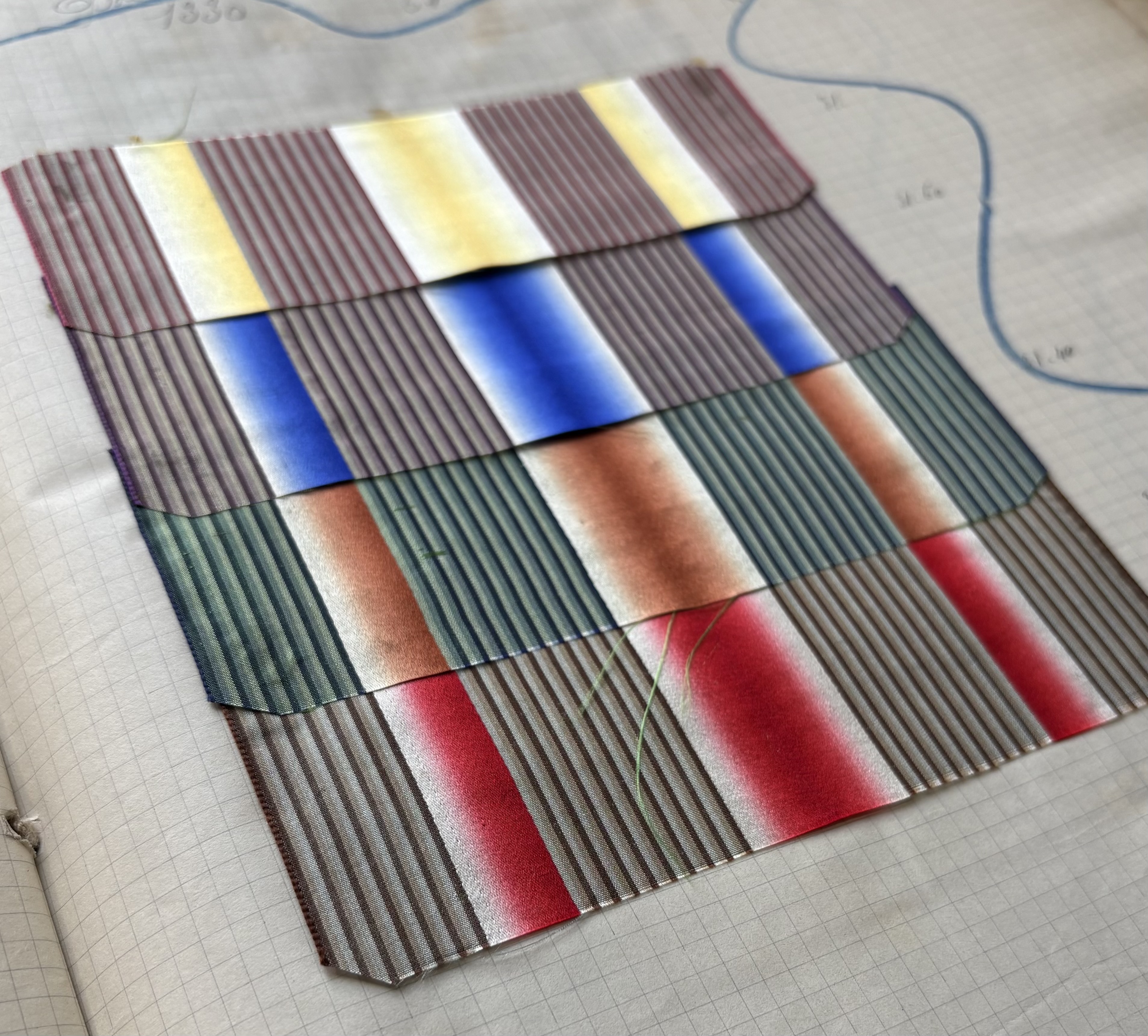
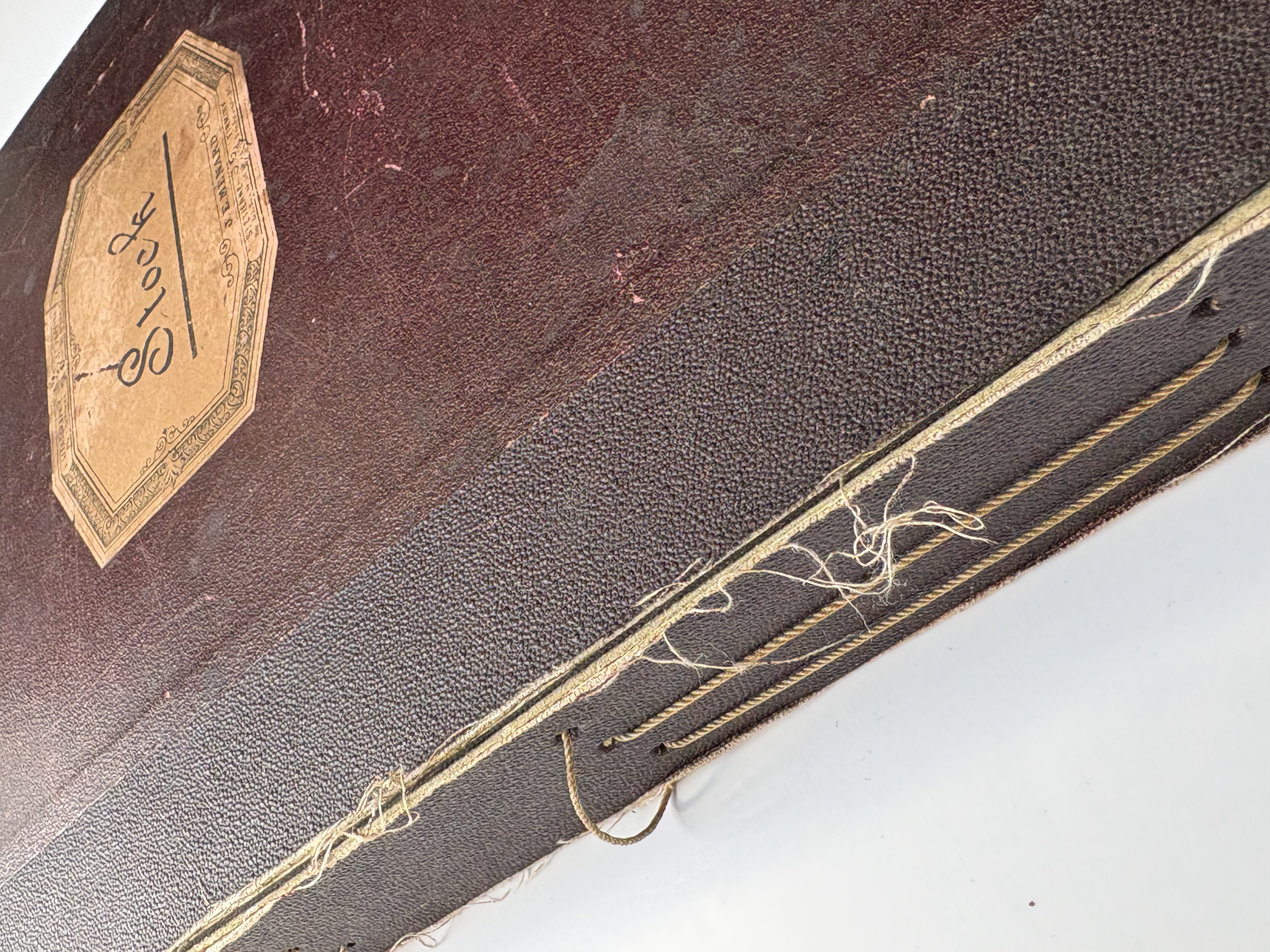
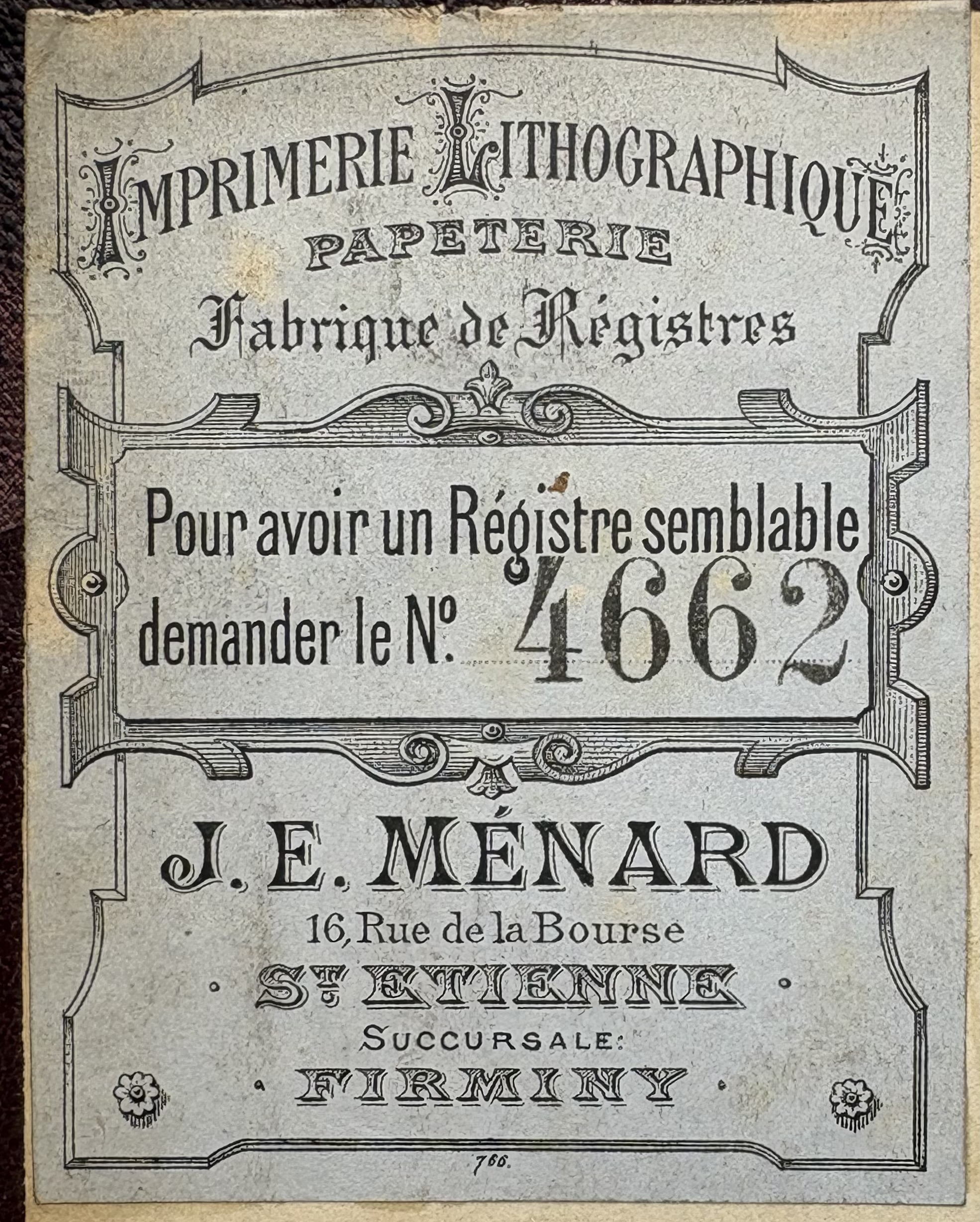
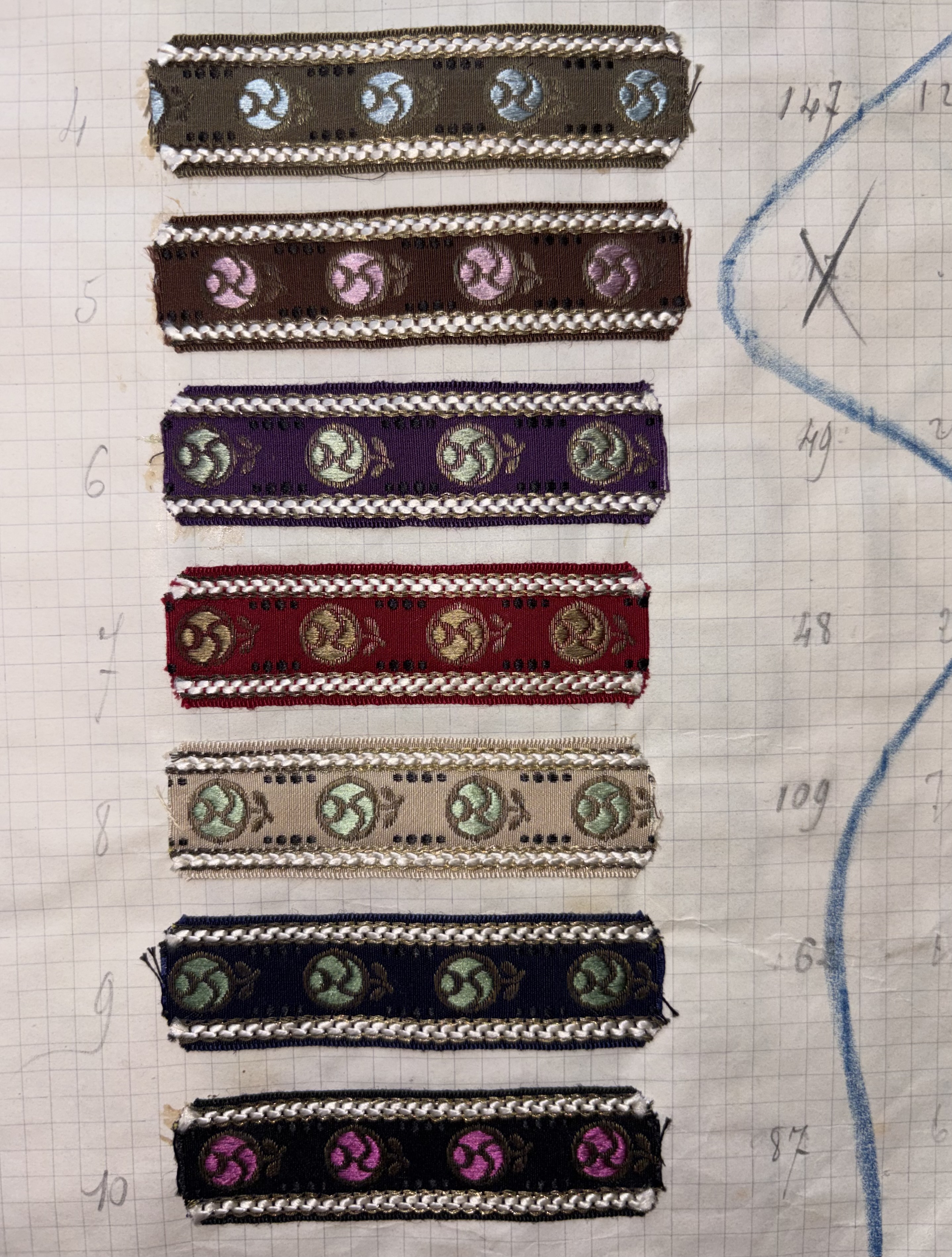
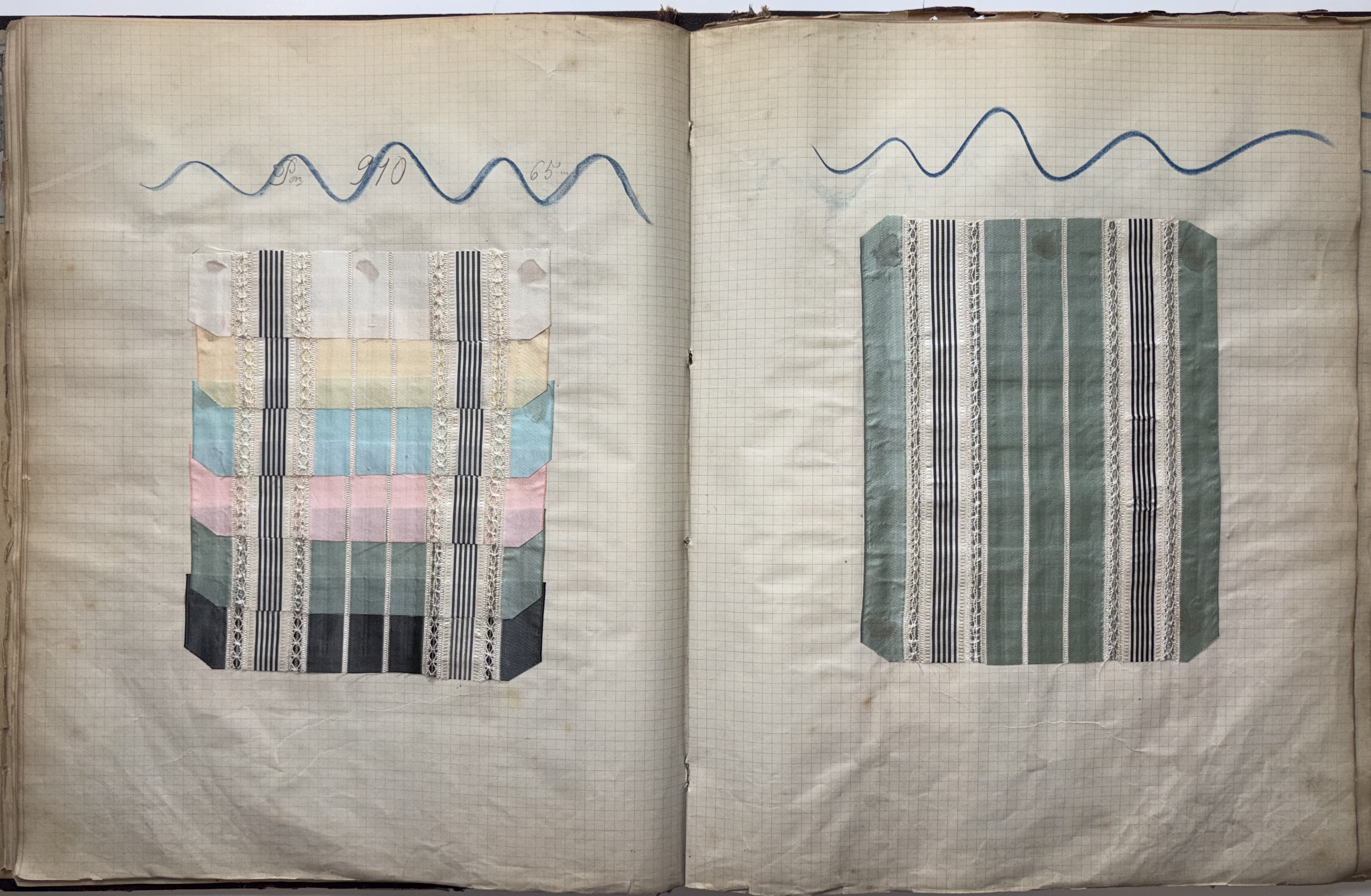
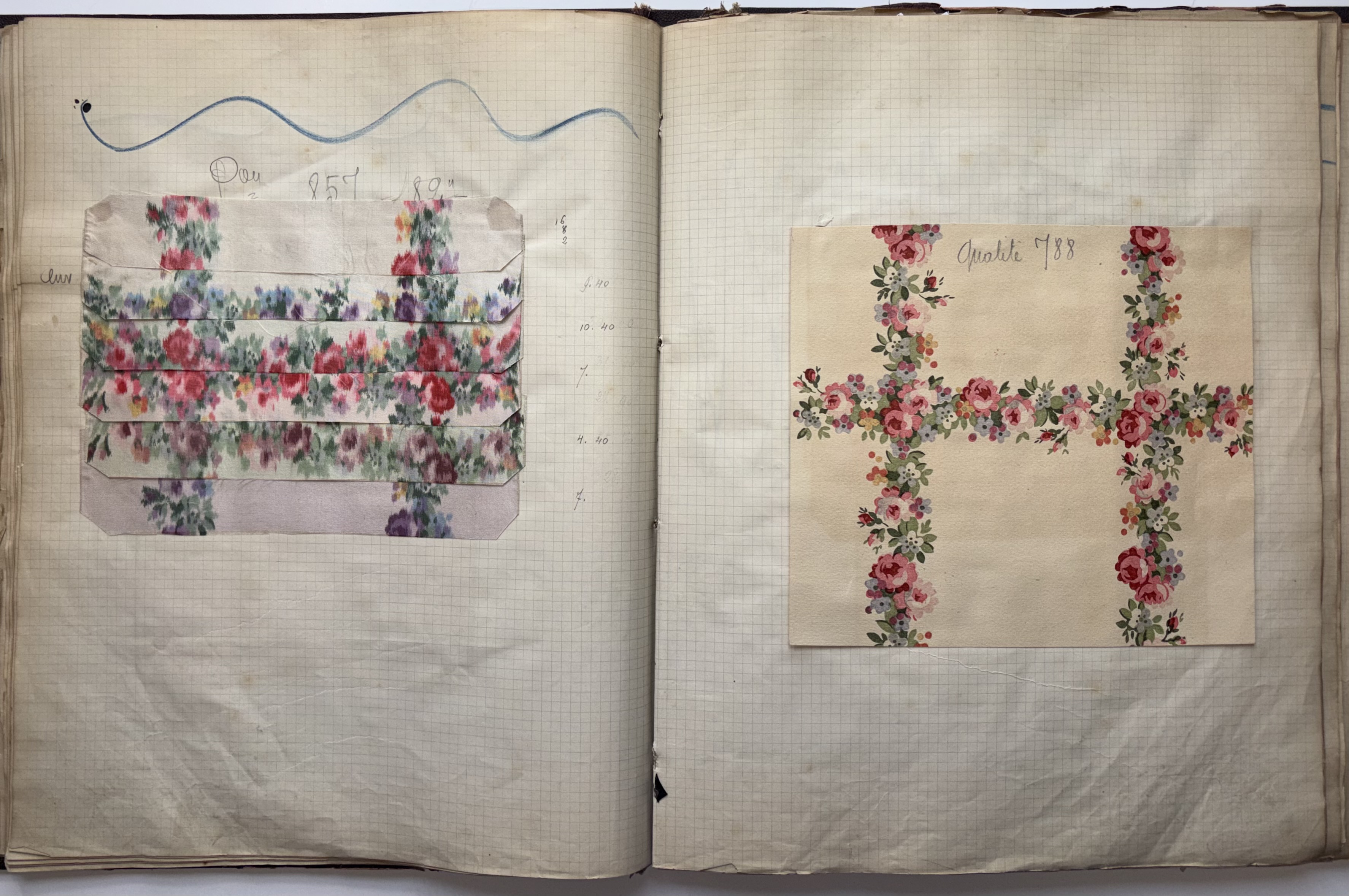
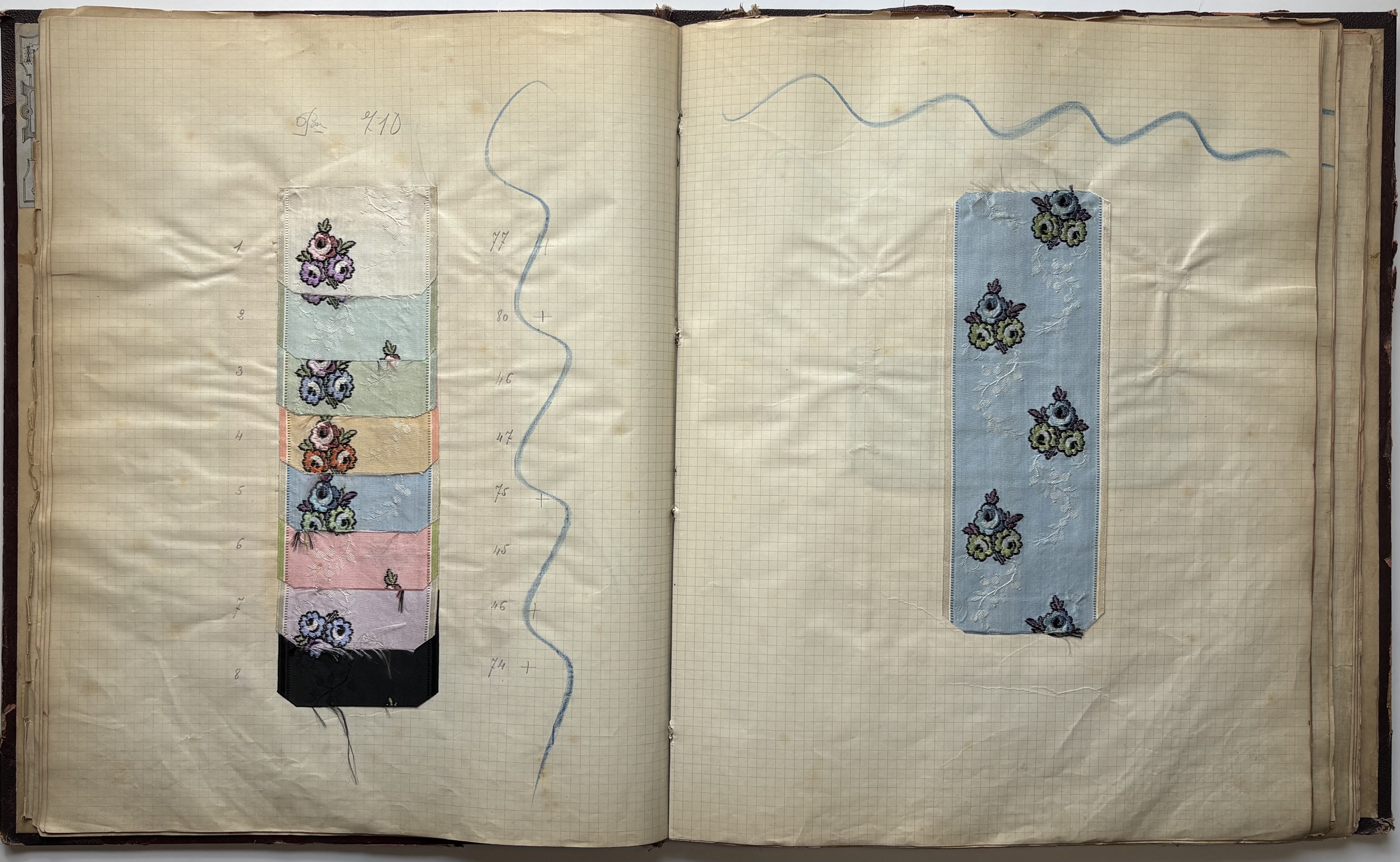
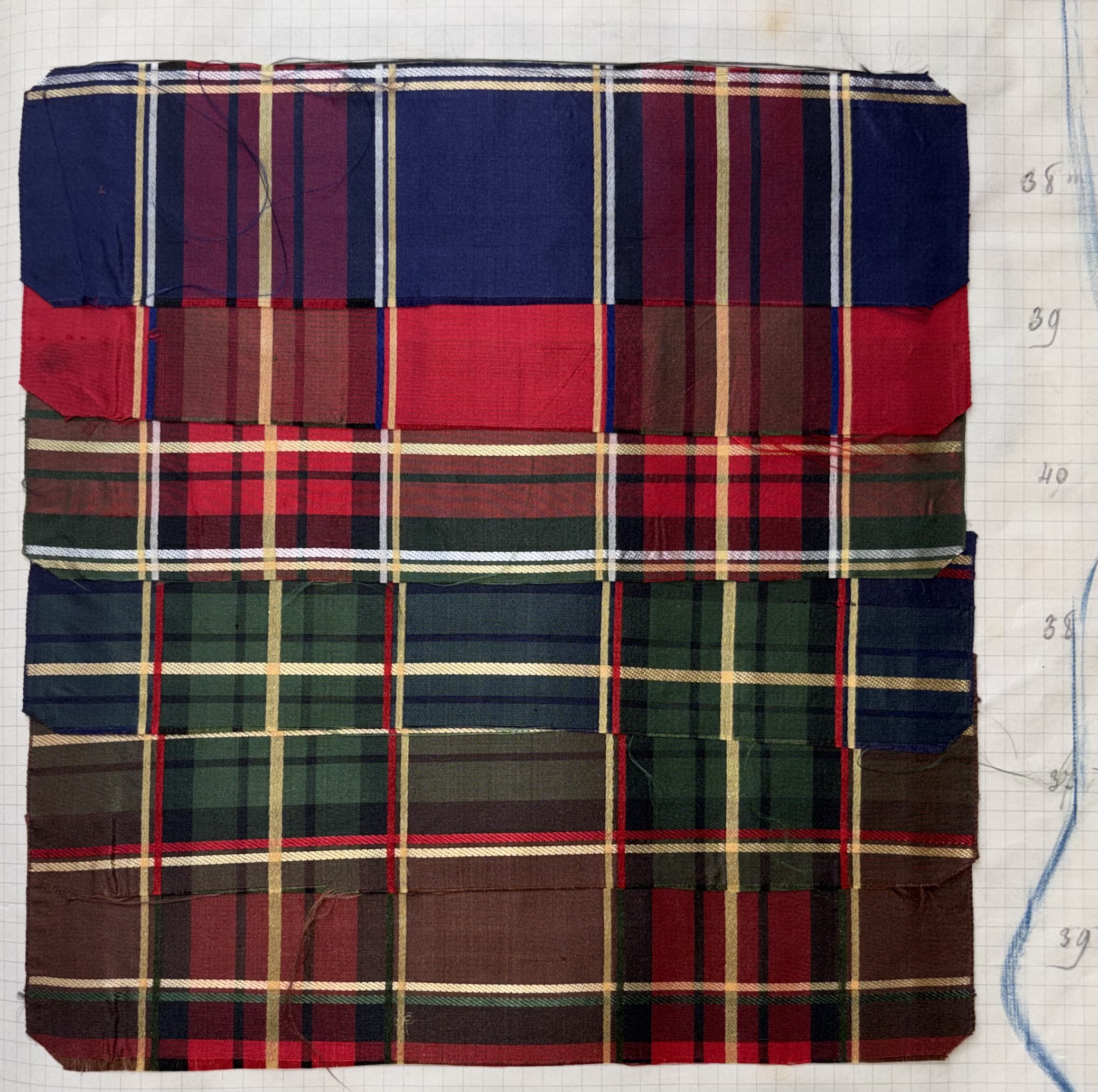
FULL DESCRIPTION: Album d'échantillons "Stock". 1907-1908
[TEXTILE SAMPLES]. “Stock.”
[St. Etienne, 1907-08].
(35.5 x 28 cm) [72] leaves, 471 textile samples
Bound in a contemporary portfolio with thick boards, buckram spine and corners, paper covered boards, flat spine with sewing threads exposed, textile samples mounted on graph paper. Binding badly worn, joints cracked, graph paper spotting, and page edges worn in a well-used working sample book of silk samples for ribbons and other use, with some fading to a few samples, but well-preserved nonetheless. Bookseller’s ticket pasted to the front pastedown “J.E. Ménard, 16 rue de la Bourse, St. Étienne.”
This stock book of silk fabrics displays nearly 500 different samples, with a variety of colorways displayed on the left-hand page and a larger sample on the right-hand page, with only a few of the large swaths missing. Although the merchant is not identified, there are reference numbers written in along with prices (?), as well as some dates. The fabrics range from finely patterned silks to linens to brocades.
Saint-Etienne has been a significant producer of silk textiles since the 1600s, rising in the middle of the 19th century to be among the best in the world for textile production and an innovator in techniques in the evolving industry. In nearby Lyon, where weavers specialized in larger sheets of textiles, the production of woven silk ribbons was the focus in Saint-Etienne. Manufactures in the latter city were among the first in Europe to broadly adapt the Jacquard looms (invented in Lyon).
The notes indicate that the album dates to 1908, along with the stationer’s ticket which locates it at St. Étienne.